The Trip
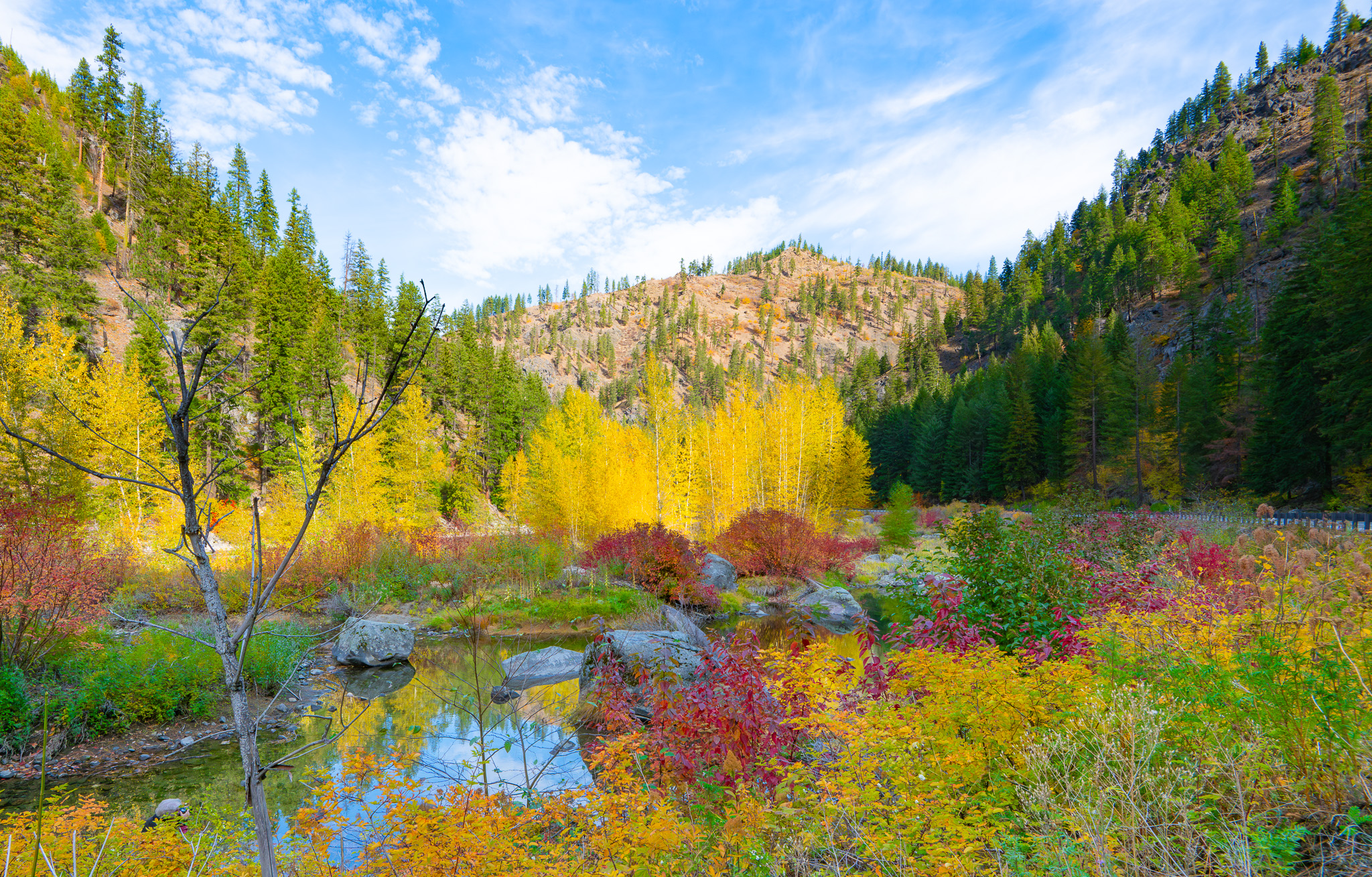
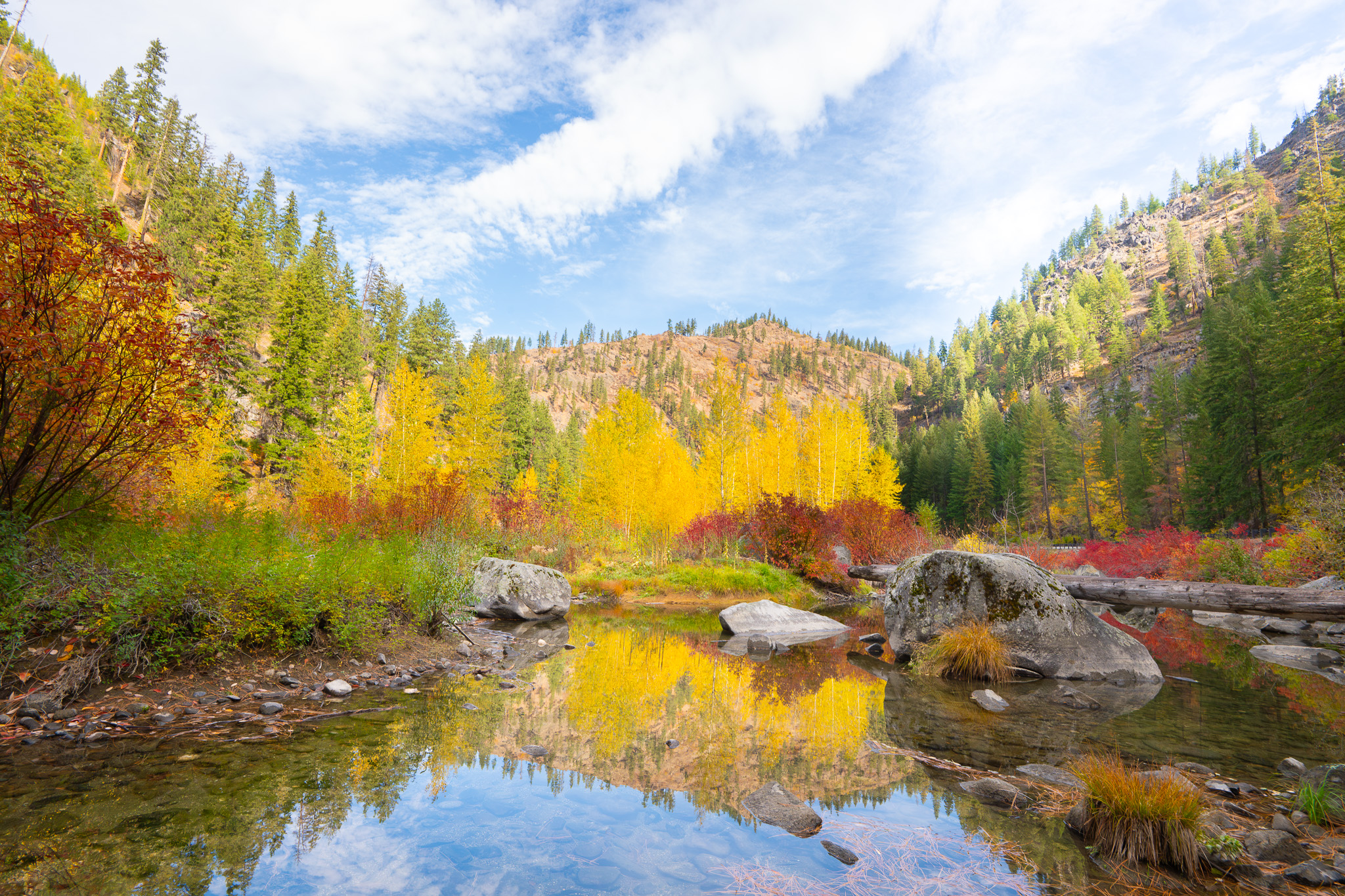
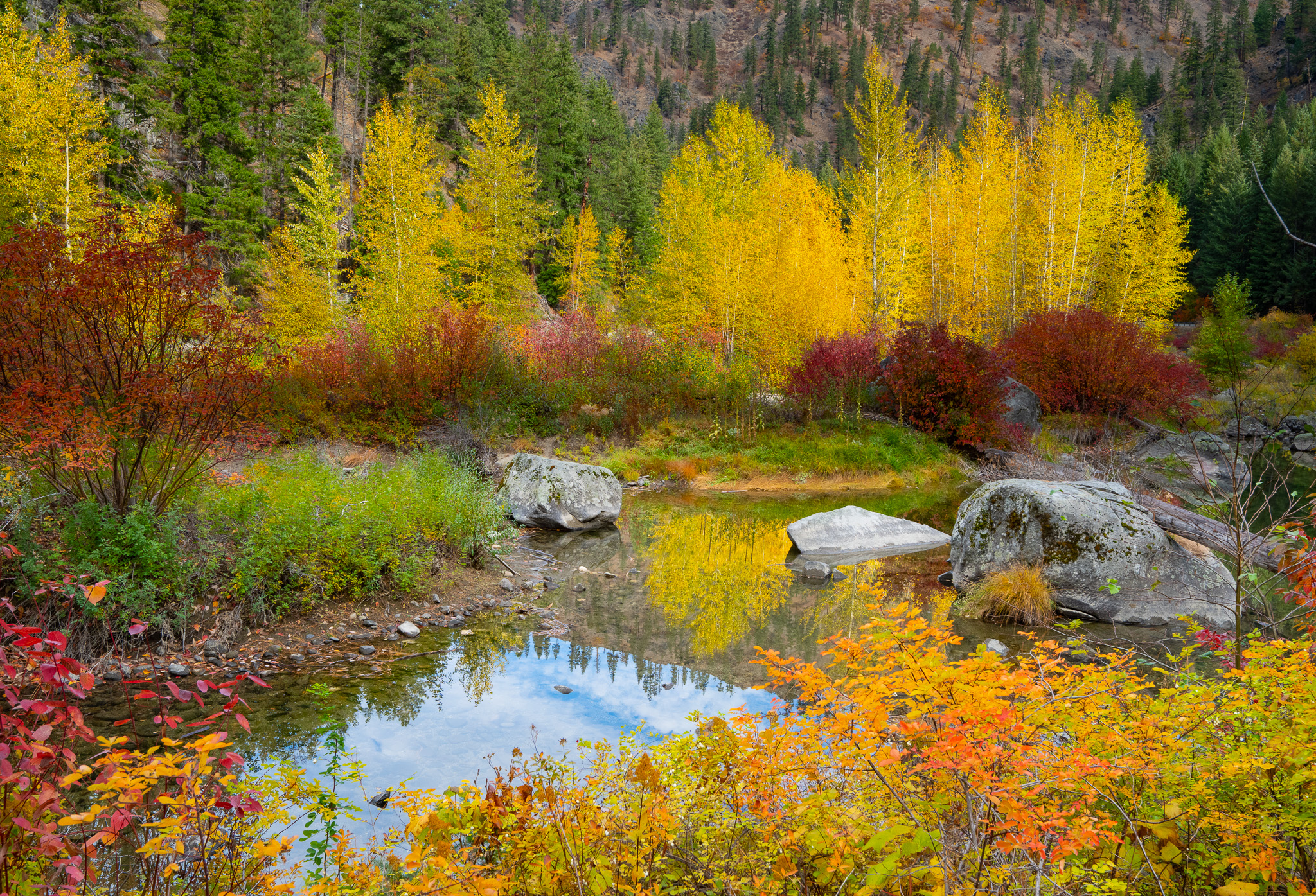
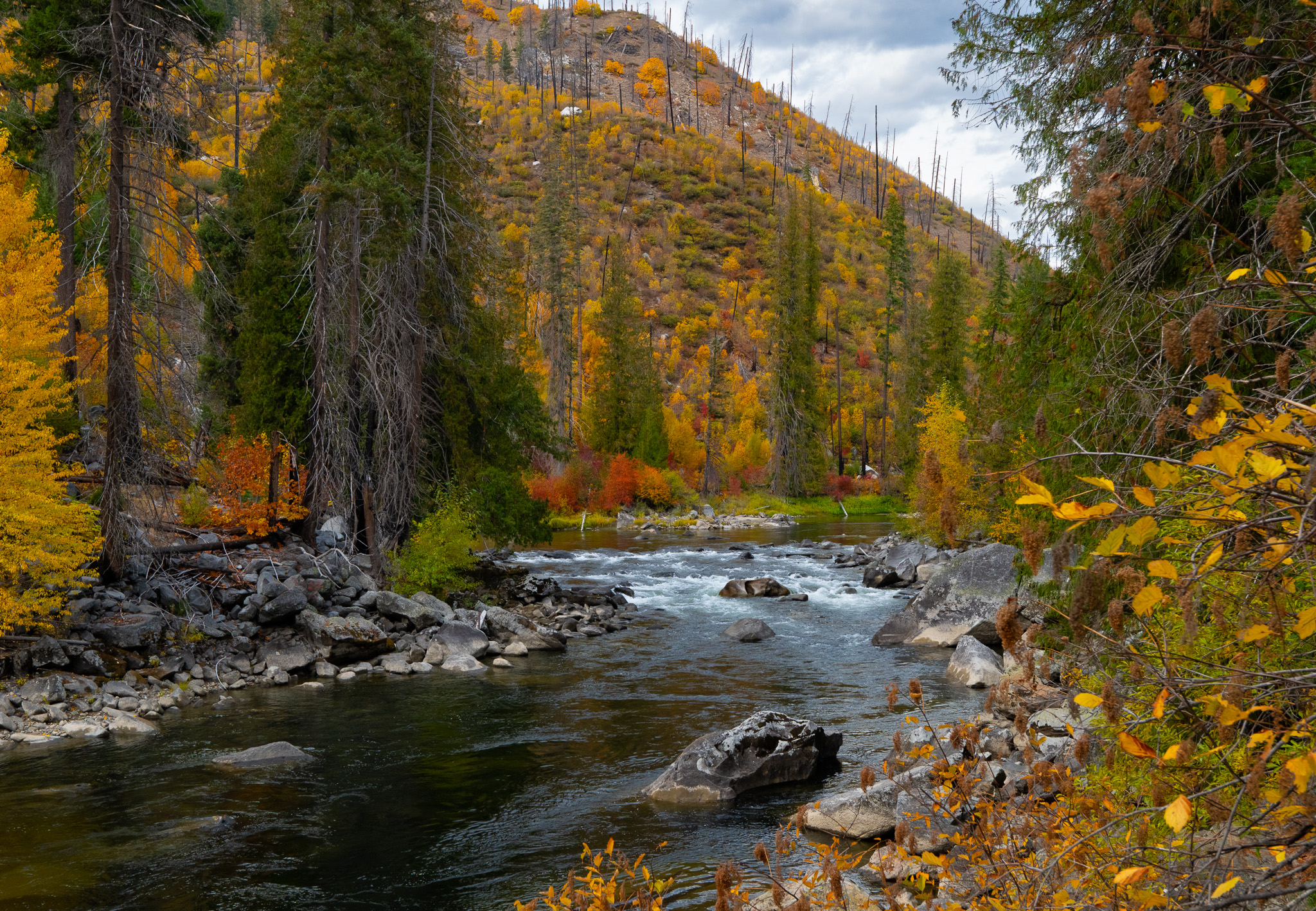
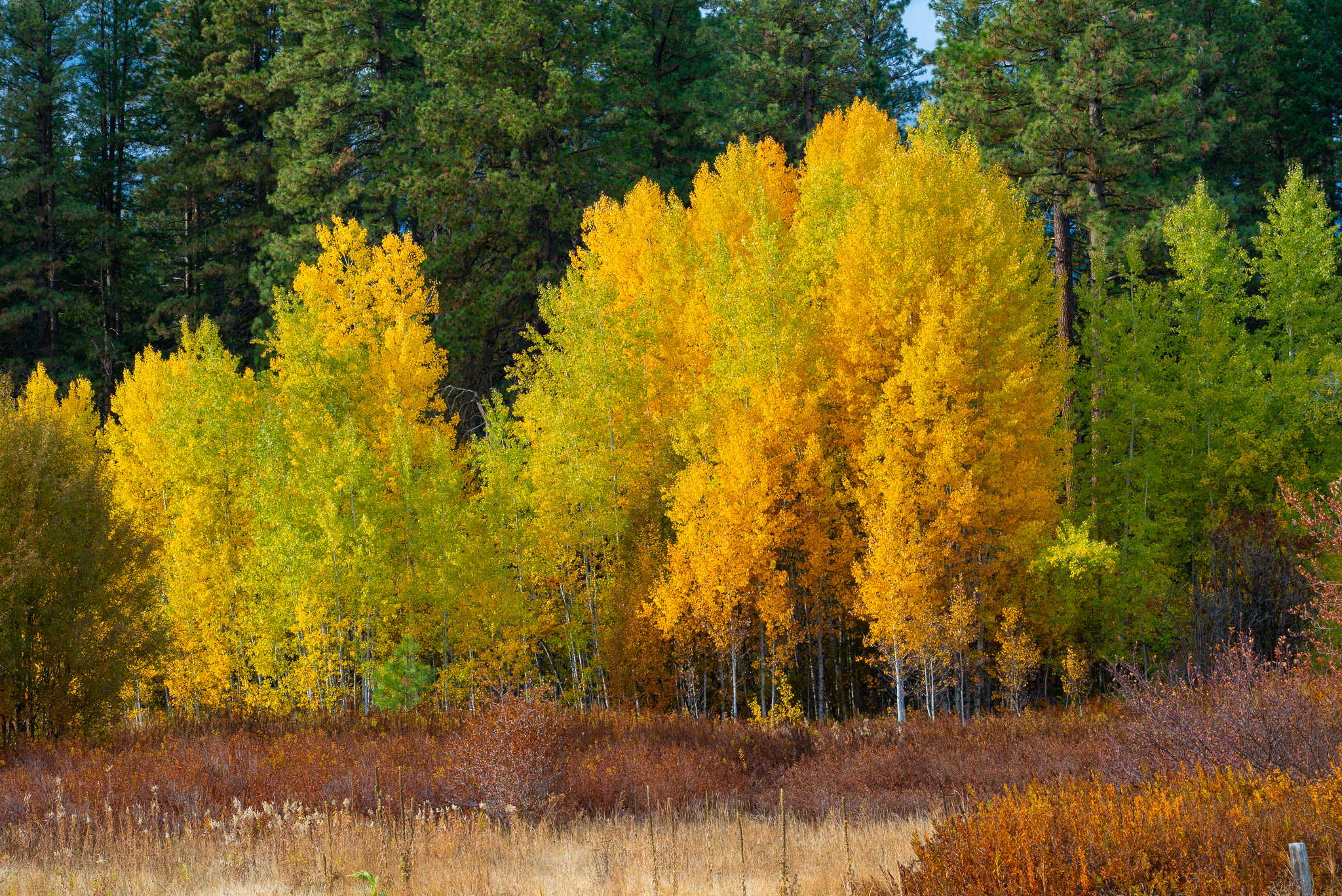
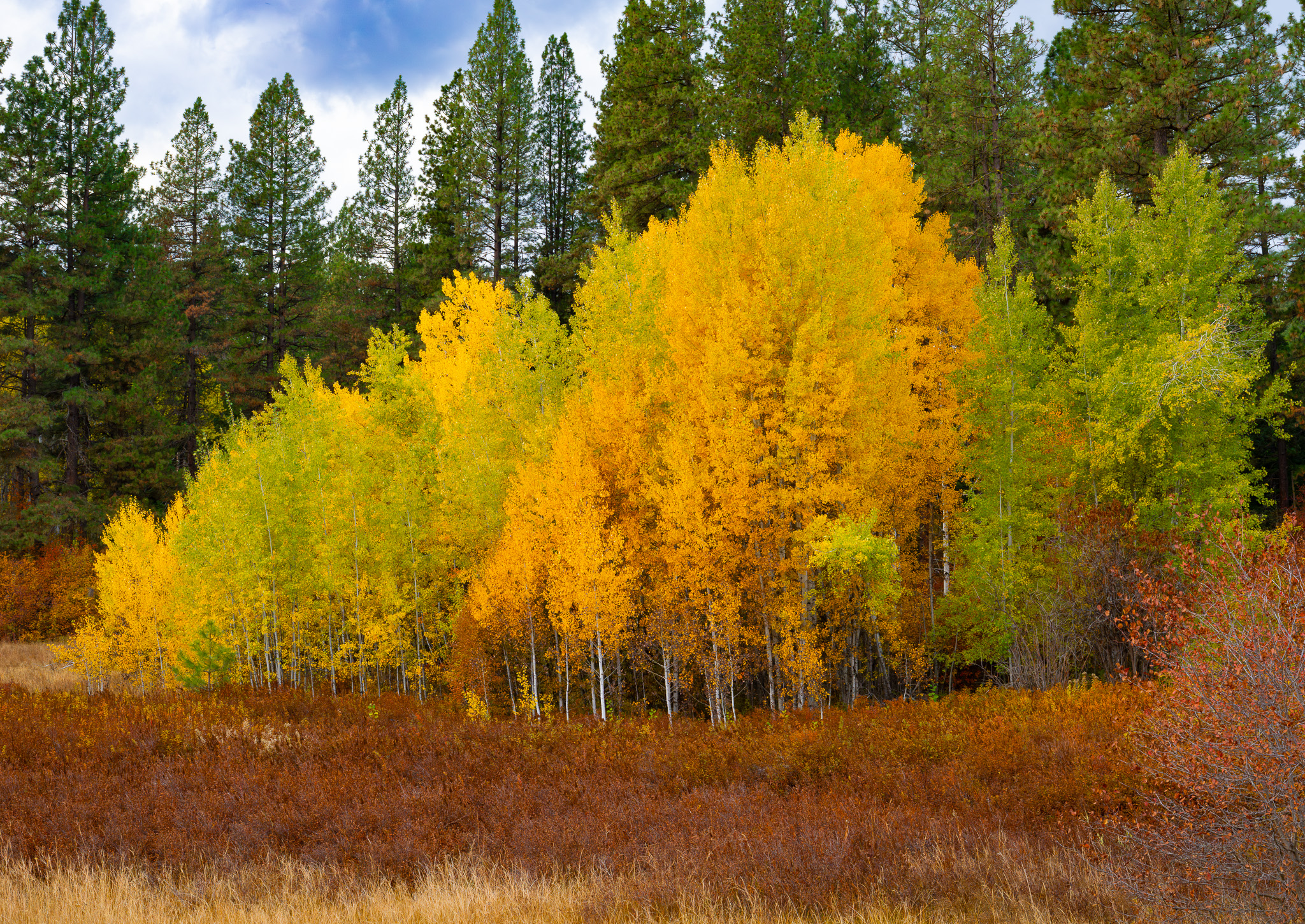
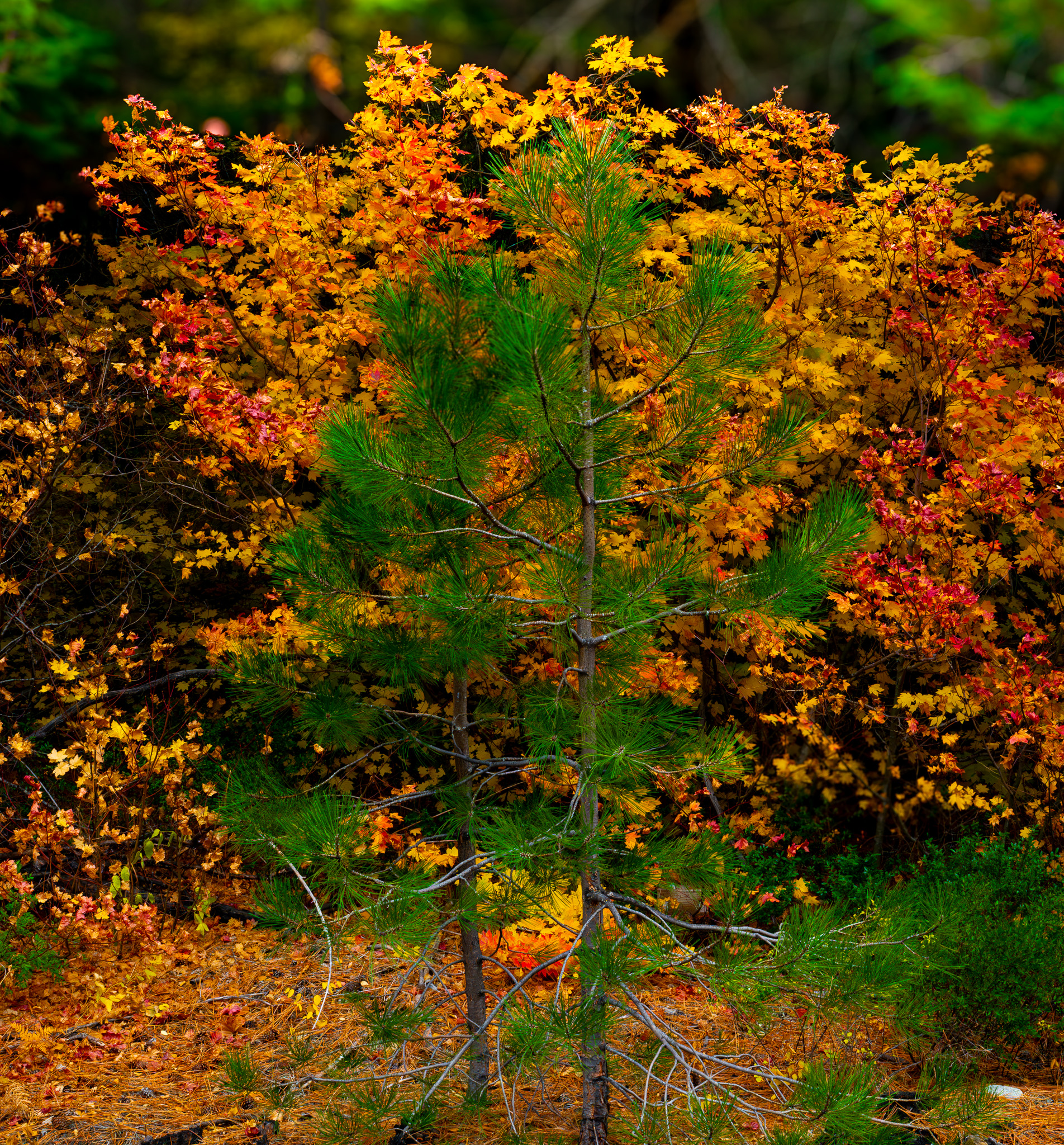
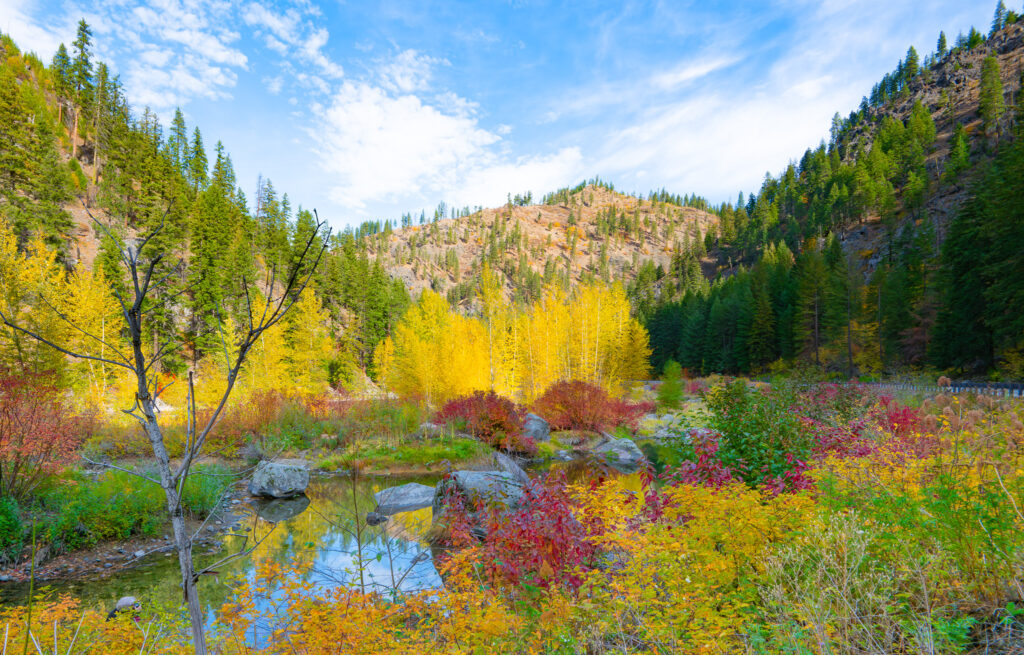
I always make it a point to visit Tumwater Canyon in the fall to capture its incredible color palette — a patchwork of vine maples, golden aspens, and deep green evergreens framed by blue skies and fluffy white clouds. It may not have endless rolling hills of maples like you’d find back east in New England, but it’s has its own unique, Pacific Northwest color signature.
Most of the shots from this trip are right near the road, so NO hiking involved! Good hiking boots are still a must, and at 70, I’ve added a hiking pole to my kit. My German Shepherd, Thora, came along for the ride. She didn’t exactly carry the gear or scout the perfect compositions, but she sure enjoyed the trip — and yes, dogs are allowed!
Planning the Trip
If you’re thinking of heading out yourself, here’s what I recommend:
- It’s about a 2-hour drive from Everett in good weather, but since it’s a mountain pass, always check traffic and road conditions.
- Pack food, water, and a few essentials like Snickers and an energy drink.
- A wide-angle lens choice, mine are a 24–70mm and 15–30mm/Nikon Z8
- Next year, I’m adding the 70–200mm to my backpack for HDR shots.
- I bring along a portable car battery charger as well …
Weather Prep
Timing is everything in the Cascades. Fall weather can shift quickly, so don’t leave it to chance. Check multiple reliable weather sources (the National Weather Service tends to be the most accurate), and be specific in your searches — “Tumwater Canyon weather” gives better info than a broad “Leavenworth forecast.”
My favorite type of weather for shooting fall colors, partly cloudy. You’ll get those rich blue skies, great contrast, and the bonus of direct sun for backlighting those colorful leaves.
For my trip, I hit it perfectly — one golden day of sunshine. The very next day, winter arrived, and two days later the pass was closed for snow. Timing really is everything!!!
The Photo Journey
Leaving Everett, the color show starts early — just outside Monroe, WA, the foothills begin to glow. But the real magic begins in the heart of Tumwater Canyon itself — a 12-mile stretch of US Highway 2 between Leavenworth (milepost 99) and Cole’s Corner (milepost 111) in Chelan County.
Here’s a more detailed version:
- Start (east end): Leavenworth — around MP 99 on US-2
- End (west end): Near Cole’s Corner / Winton — around MP 111
- Total Canyon Length: ~12 miles (19 km)
Some Composition Ideas …
You’ll no doubt discover your own favorite compositions — that’s the beauty of photography, we all see art a little differently. But if you’re exploring Tumwater Canyon, here are two terrific photo opportunities you won’t want to miss:
-
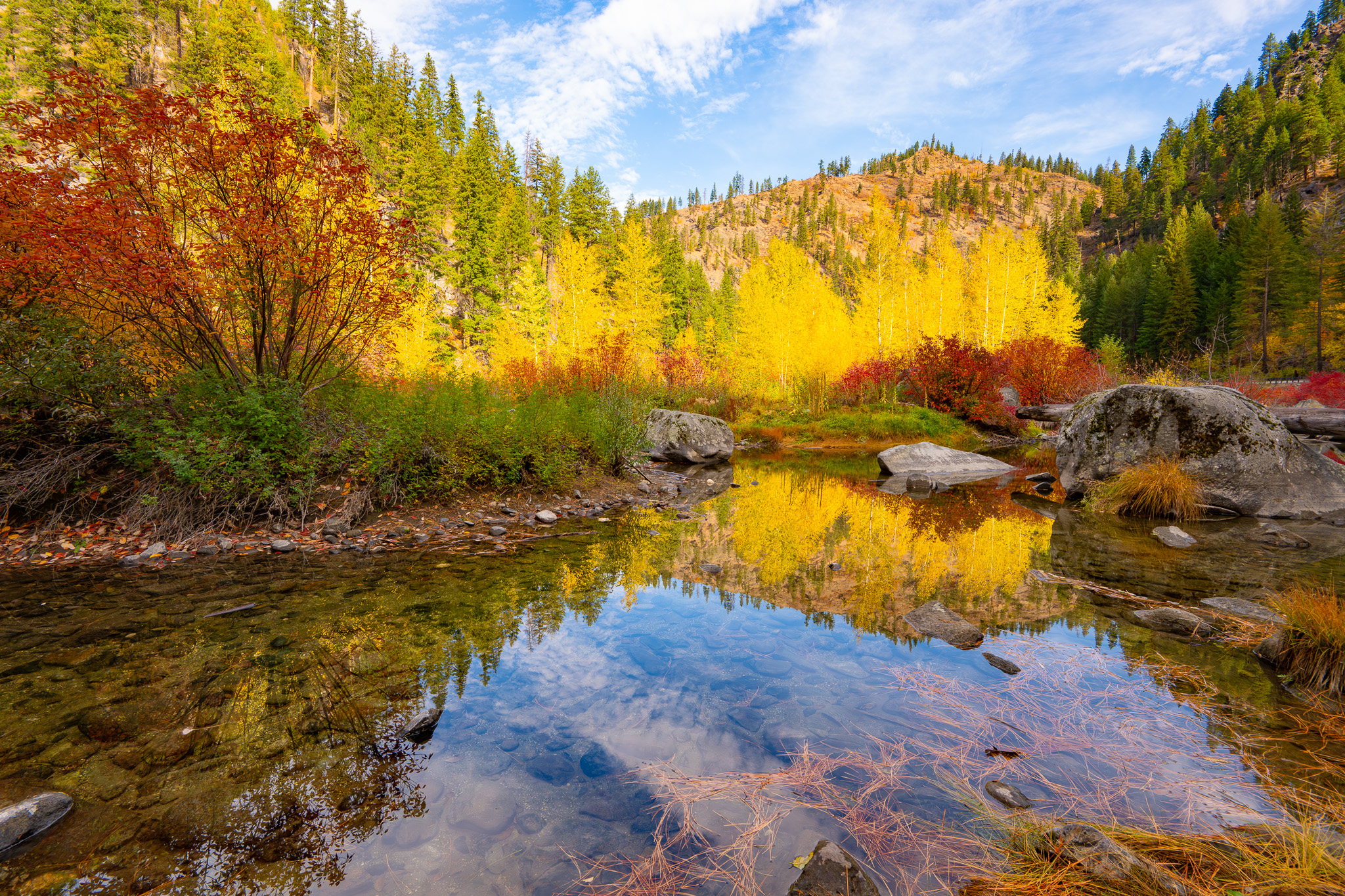
The Amazing Reflections – The still water ponds that form off the river against the canyon’s fiery maples and evergreens paint perfect mirror images on the Wenatchee River.
-
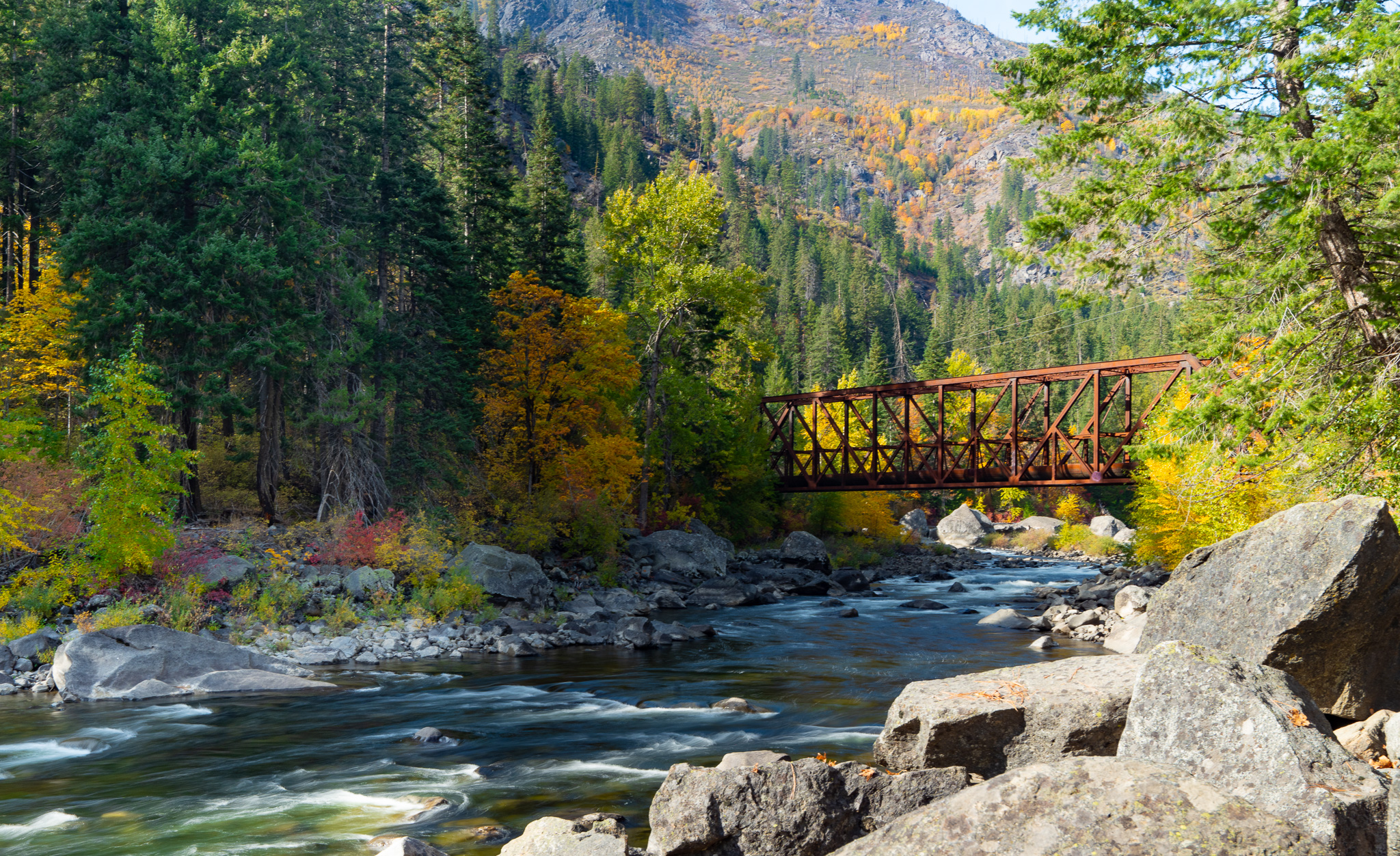
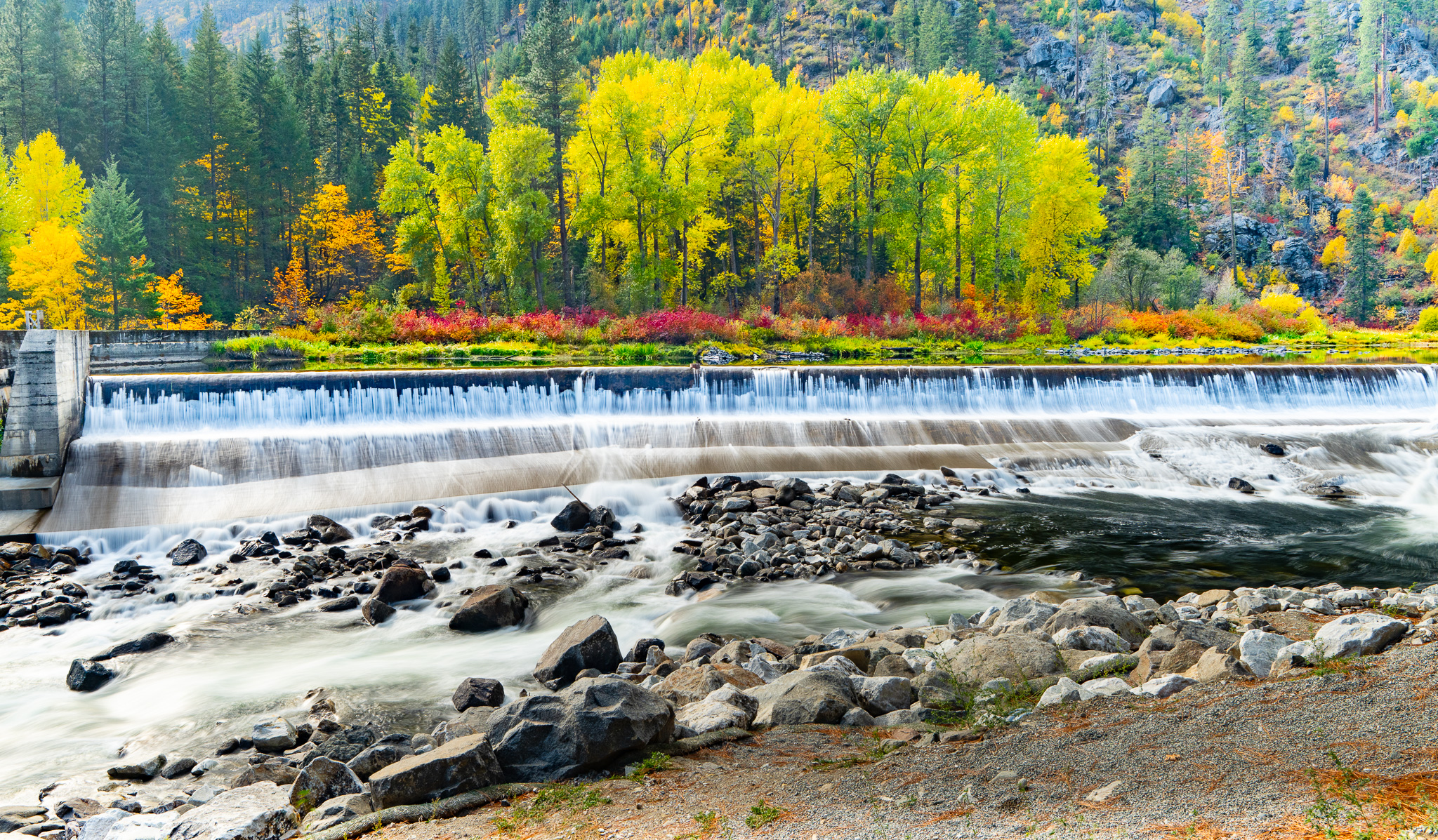
Long Exposures on the Wenatchee River – Try slowing your shutter speed to smooth out the rushing water and bring out that silky, dreamlike texture.
And just for fun, I’ve included a few tips I’ve picked up over the years. Feel free to fact-check me — I can take it!
Reflections:
The Wenatchee River offers endless opportunities for reflection shots. Calm water mirrors the yellows, reds, and deep purples of vine maples and ash trees against the dark evergreens — all under that postcard-perfect blue sky.
Some photographers use tripods for HDR or bracketed shots, but I went handheld this time. Here were my handheld settings:
- Lens: Started with 15–30mm, later switched to 24–70mm
- Shutter Speed: 1/160–1/200s (my handheld rule of thumb)
- Aperture: f/11–13 for better depth of field and definition
- ISO: 300–500 (some areas get shady)
- VR: On
- White Balance: Auto (Daylight mode)
Lightroom Edits:
- Boosted vibrance and saturation to bring out those fall colors
- Used linear gradients to balance out shadows
- Minimal noise reduction — though it’s nice to have that tool in Lightroom now!
Wenatchee River Long Exposures
The Wenatchee river, with its winding turns and gentle rapids plus … the wild Fall colors for a background, make for some pretty stunning long exposure photos. You can see the river from the highway about halfway through the canyon drive so there are numerous photo opportunities available but you won’t want to miss the Tumwater Canyon Bridge or the Tumwater Powerhouse.
Gear & Setup:
- Tripod + Variable ND filter
- Nikon Z8 / 24–70mm lens
- Remote shutter or simply use a 2-second timer on your camera.
If you Google how to shoot long exposures, you’ll get a rabbit hole of math, charts, and “easy” tutorials that are anything but. So here’s my simple, real-world version:
Step-by-Step Long Exposure Setup
- Turn Noise Reduction off on your lens.
- Set White Balance to Auto (for current light conditions).
- Switch to Manual Mode.
- Start with Shutter Speed = 1s, Aperture = f/11–13, and adjust ISO for proper exposure.
- Take a base test shot to preview your exposure.
- Mount your ND filter, then set ISO 100 (or lower if possible).
- Adjust the ND filter until you achieve proper exposure.
- Shoot away!
*You could actually skip the base shot 1s SS, F13, ISO100 and adjust your ND filter for proper exposure and shoot! Up to you and I hope this was helpul!
My personal sweet spot for river motion is 1-second shutter speed — enough blur for drama while still showing texture and rocks. If you’re after that dreamy, silky water effect, experiment with up to 10 seconds.
Wrapping Up
By the time Thora and I packed up, the light had shifted and the air was cooling fast — a sure sign that snow wasn’t far behind. Tumwater Canyon never disappoints, and every trip seems to bring something new: different clouds, different color tones, and always a new favorite photo.
If you’ve never photographed it in fall, make it a priority next season — and if you’d like to learn these techniques hands-on (without getting lost in YouTube tutorials), check out my Tumwater Canyon Fall Workshop.
After all, it’s hard to beat a day spent outdoors, camera in hand, surrounded by gold leaves — and a tired but happy dog by your side.